
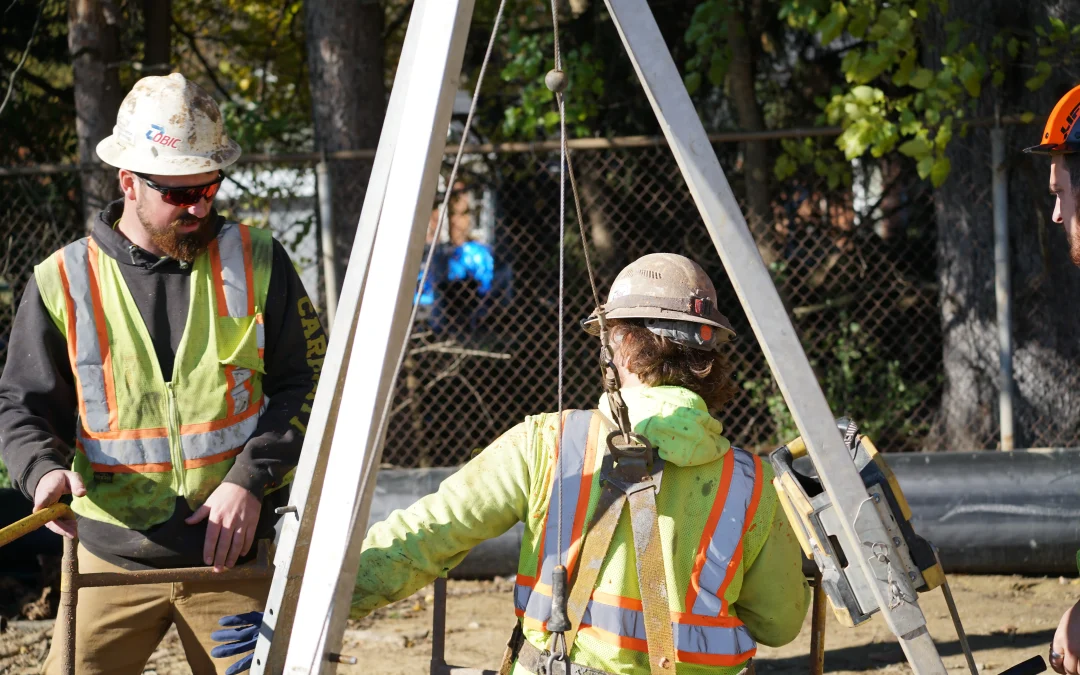
Large-diameter interceptor sewers are the backbone of municipal wastewater systems, and when they begin to deteriorate, replacement is rarely a realistic or cost-effective option. That was the challenge facing the Oakland County Water Resources Commissioner’s Office on the Evergreen–Farmington interceptor, a major trunk line responsible for conveying wastewater from multiple communities surrounding Detroit to the Great Lakes Water Authority.
For Advanced Rehabilitation Technology (ART), the project was another opportunity to do what trenchless rehabilitation does best: extend the life of critical infrastructure in locations where open-cut replacement would be costly, disruptive, and environmentally challenging.
“This interceptor takes a lot of abuse,” said Alex Lantz, Michigan Business Development Manager at ART. “The volume alone creates a corrosive environment, and the pipe runs through areas where replacement would be extremely difficult.”
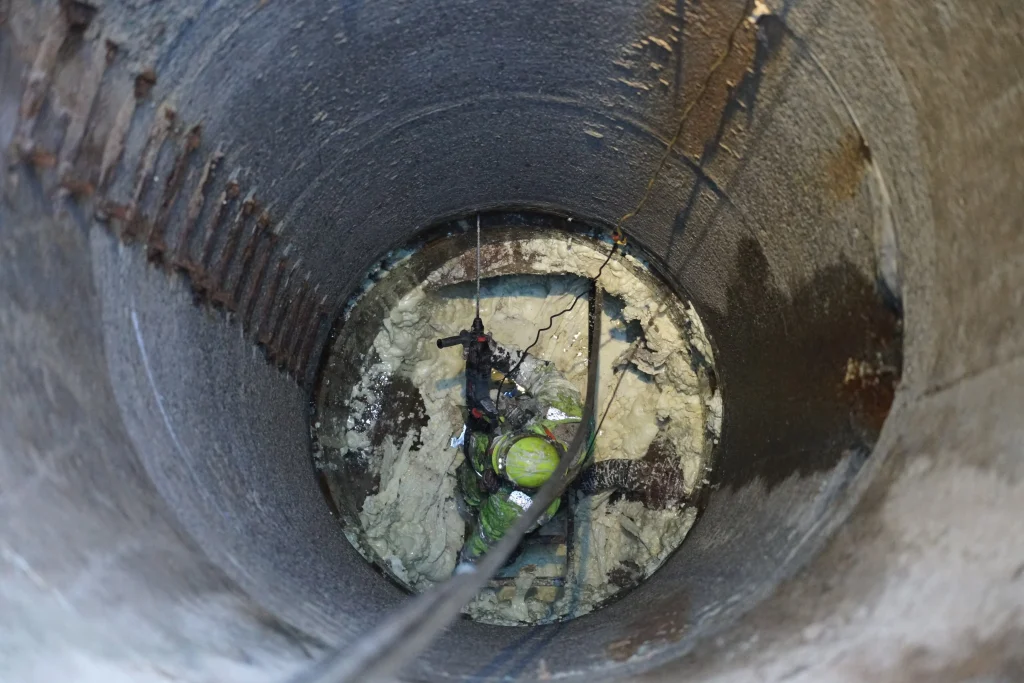
The Evergreen–Farmington Interceptor is one of more than 20 major interceptor lines in Oakland County, Michigan. These large-diameter pipes collect wastewater from branch systems across the county, making them critical to uninterrupted service.
This particular section of the interceptor runs through wooded areas, easements behind residential neighborhoods, a school, golf courses, and environmentally-sensitive land. Replacing the line through open-cut construction would have required extensive clearing, wetland permitting, and long-term disruption, at a cost estimated to reach into the hundreds of millions of dollars.
“That’s really where rehabilitation makes sense,” Lantz explained. “To replace what we lined, I don’t even want to imagine the cost or the disruption.”
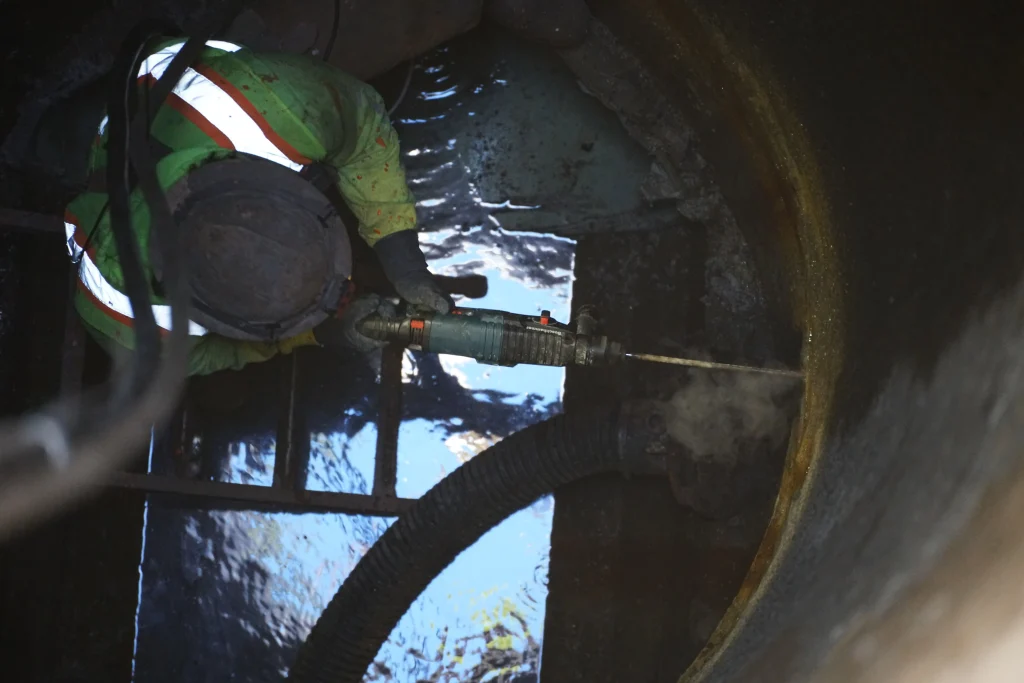
Instead, Oakland County has taken a progressive, long-term approach by rehabilitating its interceptor system in phases. This project represented ART’s third rehabilitation effort on this interceptor line, following prior successful phases.
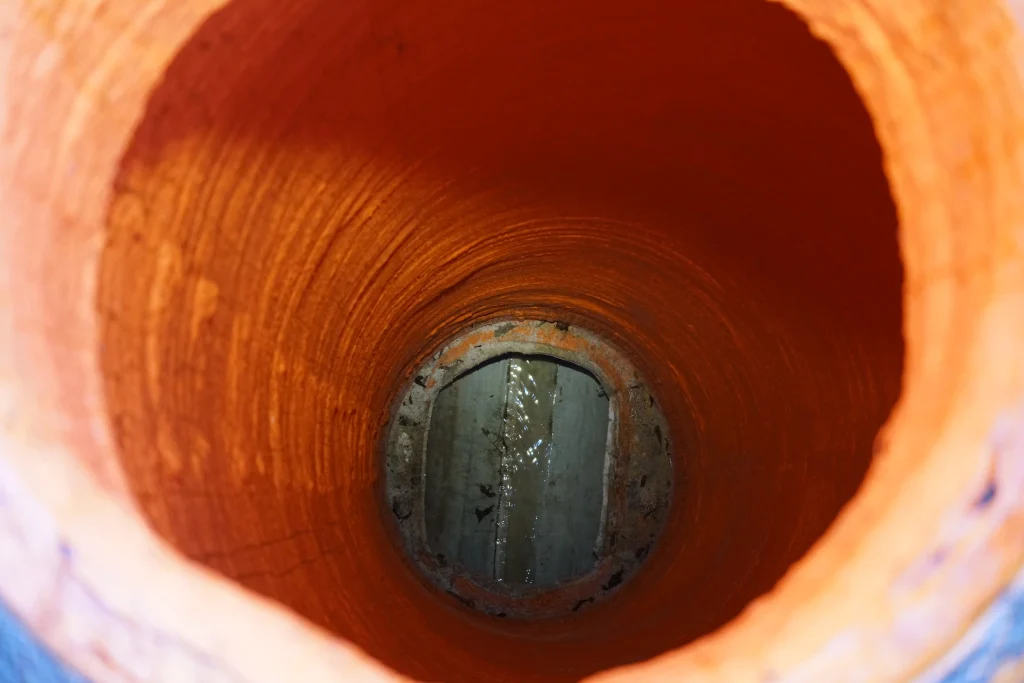
While lining manholes and structures is ART’s specialty, reaching them was one of the biggest challenges on this project. “A lot of work happens before you ever touch the structure,” Lantz said. “You have to figure out how to get equipment and crews back there without creating unnecessary impact.”
The interceptor sewer rehabilitation work was closely coordinated with a CIPP contractor responsible for bypassing the interceptor line. ART’s role required lining manholes while the bypass system was active, which is a process that comes with strict scheduling constraints.
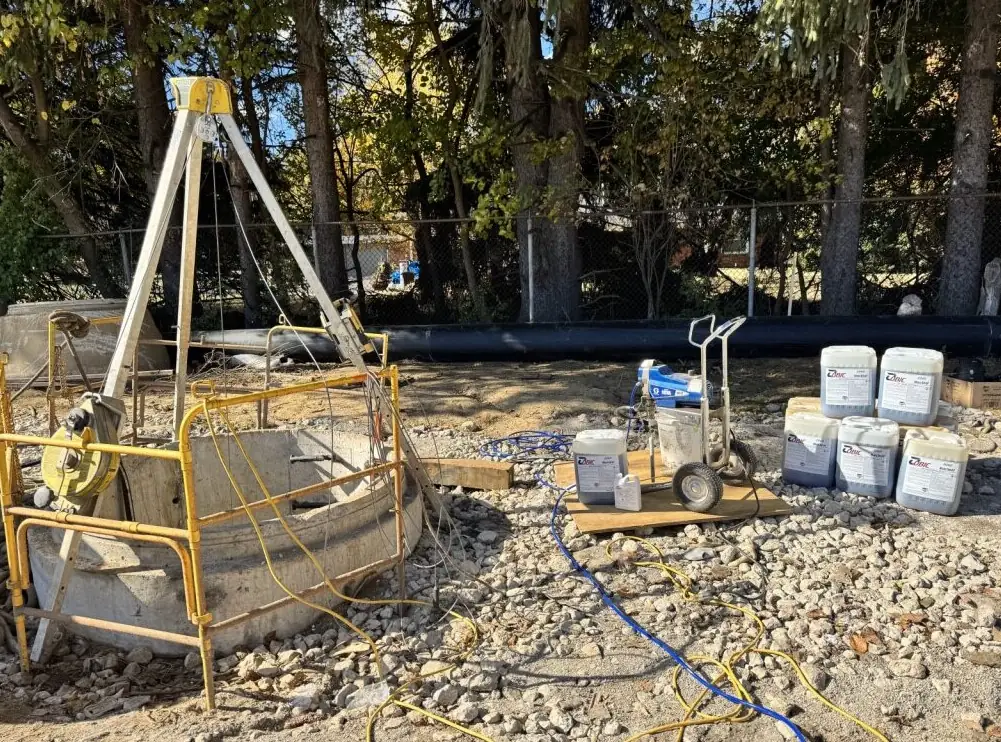
“It was a tight window,” he explained. “The bypass crews were flying people in from out of state, so timing mattered. Phase one had to be completed before they could move the bypass to phase two.”
ART mobilized two to three crews, working efficiently to complete their scope so the overall project could stay on schedule. ART’s portion of the work took approximately six to seven weeks, while the overall construction phase extended from September through December following nearly a year of design and planning by the project owners.
From wetlands and wooded corridors to backyard easements and structures beneath buildings, this interceptor illustrates why trenchless rehabilitation is often the only viable solution. By rehabilitating miles of interceptor rather than replacing them, Oakland County avoided massive excavation, environmental disruption, and extended service outages, while still addressing corrosion and long-term performance.
ART has completed numerous interceptor rehabilitation projects for Oakland County across multiple systems. That history played a key role in this project. “They know what we can do,” Lantz said. “They’re familiar with our materials, how they perform long term, and how we handle complex projects.”
That familiarity allowed ART to work efficiently within the project’s constraints, with no major setbacks and a final outcome that met expectations across all stakeholders. “It wasn’t an easy project,” he added. “But it went according to plan, and everyone was happy with how it turned out.”
If you are interested in a more in-depth demonstration of ART’s manhole lining process, we offer a customized manhole rehabilitation demonstration. These product demonstrations take approximately one hour, and can often be used to meet CEU requirements for engineers. All we need from you is a location and a manhole no deeper than 8-9’. Schedule a demonstration by completing the contact form or calling 419-636-2684.
